No one expects an accident—a fall, a broken bone, or unexplained pain. One moment everything is fine, and the next, something happens, and people find themselves in the emergency room, nursing home, or home care. One tool that is revolutionizing emergency and out of office care is the portable X-ray system. Designed for fast, on-the-spot imaging, these systems offer a critical advantage over traditional, stationary X-ray machines, being able to go to the patient rather than needing the patient to come to them.
Why are portable X-rays making such a significant impact on the speed and efficiency of diagnostic imaging, potentially making a life-or-death difference? Let’s explore some key aspects of portable x-ray equipment.
Faster diagnosis in Emergency Situations
Imagine a patient with a suspected pneumothorax (collapsed lung), experiencing shortness of breath and a dry, hacking cough in the ER room. The doctor has only a few minutes to confirm the diagnosis. With portable X-ray equipment on hand, there’s no need to transport the patient from the ER to the imaging department. The doctor can simply bring the imaging device to the patient’s bedside, quickly verify the diagnosis, and proceed with inserting the needle to remove the excess air—confident that this is exactly what the patient needs.
This ability to perform imaging outside an x-ray room minimizes the risk of further harm, allowing patients to receive the necessary diagnostic imaging without the risks associated with movement. It also accelerates decision-making, enabling quicker interventions and ultimately improving patient outcomes.
But this benefit is not only for patients; it also offers a significant advantage for Emergency Departments. ERs in the U.S. often operate at or beyond capacity, especially in large urban hospitals with high patient volumes. Portable X-ray systems help alleviate this burden by enhancing workflow efficiency. Because these systems can be deployed directly at the point of care, healthcare providers can obtain images more quickly, allowing for faster treatment and discharge of patients.
This increased efficiency can reduce ER overcrowding and improve patient throughput, which is essential for hospitals aiming to meet value-based care goals. By expediting diagnostics and minimizing wait times, portable X-rays help streamline operations in the often chaotic and high-stress environment of the ER.
Expanding Access and Taking Imaging to New Locations
Portable X-ray equipment offers significant benefits for individuals in hard-to-reach locations, especially those unable to travel to healthcare facilities. It is particularly advantageous for patients whose conditions mean that they cannot walk or would even be at risk of sickness or injury being transported to a hospital. Additionally, portable X-ray devices are invaluable during natural disasters, mass casualty incidents, and pandemics like COVID-19. Their mobility allows for rapid deployment in makeshift emergency units, mobile clinics, or field hospitals, where access to traditional radiology equipment may be limited or unavailable.
In disaster scenarios such as hurricanes, earthquakes, or mass casualty events, portable X-ray units enable critical imaging in non-traditional settings like temporary medical tents or triage centers. This capability ensures that healthcare providers can make rapid, informed decisions about patient care, even in the most challenging environments.
Increased Access for Small Hospitals and Clinics
Many rural hospitals and clinics often lack the budget or patient volume to justify the purchase of multiple radiology rooms. Portable X-ray systems present a practical solution, offering these facilities essential imaging capabilities without the high costs associated with traditional systems.
For rural emergency departments, portable X-ray systems can be a game-changer, allowing providers to offer rapid, reliable diagnostics without the need to transfer patients to larger hospitals. This improves access to quality care for patients in remote locations, ensuring they receive timely treatment without the delay or expense of long-distance transport.
Mobile vs Portable X-Ray
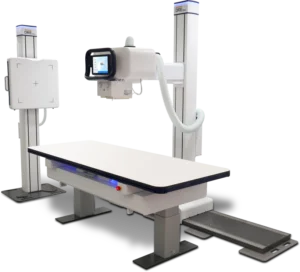
There is a significant difference between portable and mobile X-ray equipment. Mobile X-ray systems are specifically designed for use within a single healthcare facility and feature a wheeled design that allows for easy maneuverability from room to room. These units typically consist of an extremely heavy battery-powered machine that can be repositioned throughout a hospital or clinic. Often delivering 32kw to 40kW power, close to less powerful full radiology rooms, mobile units generally provide higher-quality imaging, making them suitable for hospital environments where difficult exams need to be done, such as emergency rooms or intensive care units.
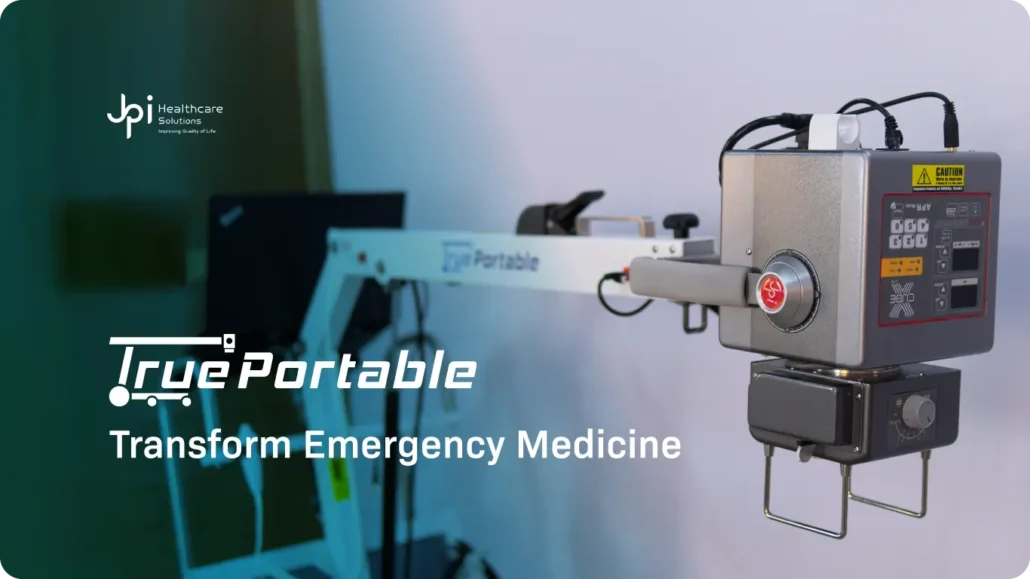
In contrast, portable X-ray stands are smaller and lighter, designed for transport outside of traditional medical settings. They prioritize convenience, being designed to be transported, unfolded and setup as quickly as possible in cramped and inconvenient conditions. Portable X-ray machines may run off of 120V wall socket power or have built-in batteries, enabling them to operate independently of a high powered electrical supply. This feature makes them ideal for use in remote locations, emergency situations, or during natural disasters where access to standard medical facilities may be limited.
Overall, while both portable and mobile X-ray units play essential roles in medical imaging, they cater to different needs and environments. Mobile X-ray stands excel in providing high-quality imaging within healthcare facilities, while portable X-ray stands offer flexibility and accessibility in a variety of settings, including field operations and rural clinics.
The portable providers market
A large and growing market in the US are companies that provide imaging services to individuals, nursing homes, and clinics onsite, outside the standard radiology departments. The Portable X-ray providers are undergoing significant growth and transformation, primarily fueled by technological advancements and rising demand for accessible diagnostic imaging. The increasing prevalence of chronic diseases, an aging population, and the need for efficient and immediate diagnostic solutions in both urban and rural healthcare settings all have greatly increased demand for these services in recent years.
The North American region, especially the U.S., is positioned to lead the market due to its robust healthcare infrastructure and the presence of top technology providers. Favorable reimbursement policies and growing awareness of portable imaging solutions among healthcare professionals further bolster market expansion. This evolving landscape indicates that portable X-ray devices will play an increasingly vital role in healthcare delivery, particularly in emergency and rural contexts where traditional imaging may not be readily accessible.
As hospitals and urgent care centers strive to enhance patient outcomes while managing costs, portable X-ray systems are set to become even more integral to emergency medical practice. By providing rapid, bedside imaging, these systems ensure that healthcare providers have the necessary tools to respond swiftly and effectively when time is critical.
Learn more about our Portable X-Ray equipment.