When healthcare organizations evaluate new imaging equipment, the conversation often starts with one question: How much does it cost? It’s an important question, but rarely the most important one.
The real financial impact of an imaging system extends far beyond the purchase price. Installation requirements, workflow efficiency, staffing needs, patient throughput, facility space, maintenance costs, and future scalability all contribute to the return on investment.
This is especially true when comparing mobile X-ray systems and traditional fixed radiography rooms. While both are designed to produce high-quality diagnostic images, they support healthcare operations in very different ways.
As healthcare providers face increasing pressure to improve efficiency, reduce operational costs, and maximize resources, choosing the right imaging solution has become as much a financial decision as a clinical one.
Understanding the strengths, limitations, and long-term costs associated with each option can help organizations make an investment that supports both patient care and business performance.
Understanding the Difference
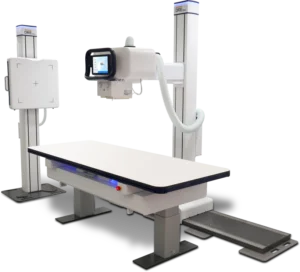
A fixed X-ray system is permanently installed in a dedicated imaging room where patients are brought for examinations. These systems have traditionally been the foundation of radiology departments and imaging centers.
A mobile X-ray system is designed to move wherever it is needed within a facility, from emergency departments and ICUs to operating rooms and patient floors, allowing healthcare professionals to perform imaging closer to the point of care.
Both solutions can provide excellent diagnostic capabilities, but the financial advantages of each depend largely on the facility’s workflow, patient volume, available space, and operational goals.
Upfront Costs vs. Long-Term Value
Fixed systems often require additional investments beyond the equipment itself, including room construction, radiation shielding, electrical upgrades, and installation costs.
Mobile X-ray systems typically require minimal facility modifications, making them faster and less expensive to deploy.
However, the real value comes from how efficiently the system supports daily operations.
Mobile imaging can reduce logistical challenges, improve workflow efficiency, and provide greater flexibility as organizational needs evolve. Fixed systems, on the other hand, can deliver exceptional throughput in facilities with high imaging volumes and established radiology departments.
Over time, factors such as maintenance requirements, service contract terms, and technology refresh cycles also contribute to the total cost of ownership for both system types.
Space, Efficiency, and Growth
Healthcare space is valuable. A dedicated X-ray room requires permanent square footage that could otherwise be used for clinical services or patient care.
Mobile systems provide imaging capabilities without the need for a dedicated room, helping organizations maximize facility space while maintaining flexibility.
They can also adapt more easily to changing patient volumes, new service lines, or facility expansions, extending the value of the investment over time.
For growing organizations, the ability to scale imaging access across departments or new facilities without additional construction costs can represent a significant long-term financial advantage.
Which Option Makes More Financial Sense?
A fixed X-ray system is often the better investment when:
- Imaging volumes are consistently high
- Workflows are centralized
- A dedicated radiology department already exists
- Maximum throughput is the priority
- Long-term staffing and workflow are stable and unlikely to change significantly
A mobile X-ray system may provide a stronger return on investment when:
- Flexibility is important
- Space is limited
- Multiple departments require imaging access
- Facility expansion or workflow changes are anticipated
- Organizations want to avoid significant construction costs
The Bottom Line
The decision between mobile and fixed X-ray extends well beyond equipment costs. Operational efficiency, space utilization, scalability, and long-term value all play a role in determining which system delivers the strongest return for your organization
For high-volume imaging environments, a fixed radiography room may deliver the strongest return. For organizations seeking flexibility, faster deployment, and greater adaptability, mobile X-ray can offer significant financial advantages.
The most cost-effective solution is the one that aligns with your facility’s workflow today while supporting your goals for the future.
Explore Your Options
At JPI Healthcare Solutions, we help healthcare providers find the imaging solution that fits their workflow, budget, and long-term goals — whether that’s a mobile system, a fixed room, or something in between.
Because the right system isn’t the most expensive one. It’s the one that works hardest for your team every day.